
Introduction
Singapore’s metamorphosis from a city plagued by overcrowded slums and informal villages into a global model of public housing is a remarkable story of urban planning, social engineering, and government intervention. Central to this transformation was the Housing & Development Board (HDB), established in 1960, which spearheaded massive public housing projects coupled with carefully managed resettlement programmes.
Background: The Housing Crisis in Post-Independence Singapore
In the years following independence in 1965, Singapore faced a severe housing shortage. Rapid population growth, rural-urban migration, and limited housing infrastructure resulted in widespread informal settlements—commonly known as slums or kampongs. These areas were characterised by overcrowding, poor sanitation, inadequate infrastructure, and unsafe living conditions.
The government recognised that these conditions were not sustainable for long-term economic growth, social stability, and public health. As a result, addressing the housing crisis became a top priority within the nation-building agenda.
The Establishment of the Housing & Development Board (HDB)
The government’s official response was to create the Housing & Development Board (HDB) in 1960. As a statutory board under the Ministry of National Development, HDB’s mission was to provide affordable, quality public housing at a large scale.
- Mandate: Build enough homes to meet the rising demand and replace slum dwellings.
- Strategy: Construct high-density public housing estates, equipped with modern amenities and infrastructure.
- Execution: Employ innovative construction techniques and urban planning methods.
From the outset, HDB’s approach was comprehensive, involving not only physical construction but also social policies to integrate communities and improve residents’ quality of life.
Resettlement Programmes: From Kampongs to High-Rise Estates
A key component of the government’s housing strategy was the resettlement of villagers and slum dwellers into new public housing estates. This was a complex and sensitive process that required coordination between various agencies, careful planning, and community engagement.
Objectives of Resettlement
- Eliminate overcrowded, unsanitary living conditions.
- Provide residents with stable, durable, and sanitary homes.
- Encourage social cohesion and promote national identity in modern housing environments.
- Facilitate access to employment opportunities, schools, and healthcare facilities.
Implementation Steps
- Survey and Planning: Detailed mapping of existing kampongs and slums to assess housing needs.
- Community Consultation: Engaging residents about relocation plans and addressing their concerns.
- Allocation of Flats: Assigning new HDB flats based on family size and needs.
- Support Services: Providing logistical assistance, financial subsidies, and social support during transitions.
The resettlement programmes were carried out in phases, starting with pilot projects in areas like Tiong Bahru and Queenstown. Over time, these efforts scaled up, covering new towns such as Toa Payoh, Bukit Merah, and Ang Mo Kio.
Modern Housing Estates: Features and Impact
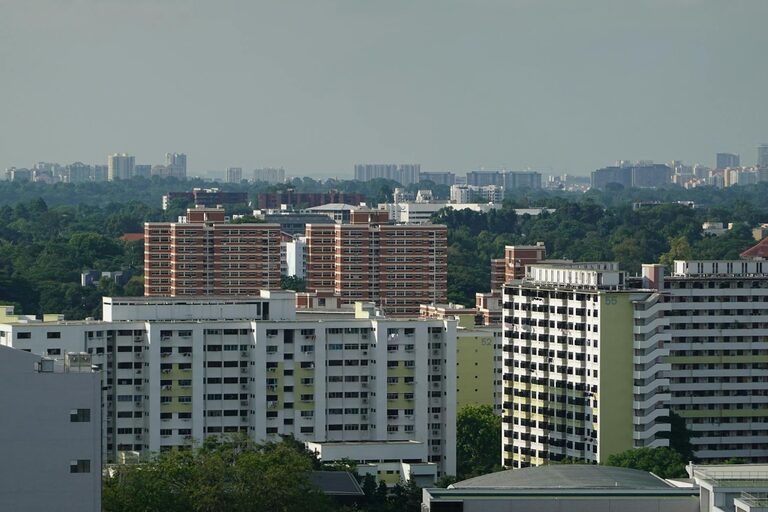
Today’s HDB towns are a testament to the government’s vision to create “homes for all”, combining housing with amenities and green spaces. Some of their defining features include:
- High-density yet livable design: Multi-storey blocks designed to maximise land use while ensuring natural light and ventilation.
- Integrated amenities: Markets, schools, clinics, parks, and community centres within walking distance.
- Robust infrastructure: Reliable water, electricity, and sanitation services managed by agencies such as Energy Market Authority.
- Community development: Initiatives to foster social engagement and multi-generational interaction.
The transformation has led to significant social and economic benefits, including improved health outcomes, enhanced social stability, and boosted economic productivity.
Key Challenges and Lessons Learned
The resettlement and redevelopment programmes were not without challenges. Some of the main issues included:
- Resistance from residents: Emotional attachment to kampong life and fears of displacement.
- Financial affordability: Ensuring flats were accessible to lower-income families.
- Cultural adjustments: Moving from informal village settings to regimented apartment living.
Despite these challenges, transparent policies, phased implementation, and government subsidies helped ease transitions. The experience has offered useful lessons in urban planning, social policy, and community engagement for other cities facing similar challenges.
Role of Other Agencies and Policies
Besides the HDB, other government bodies like the Central Provident Fund (CPF) Board played important roles by enabling financing for flat purchases through savings schemes. Likewise, coordinated efforts with utility providers ensured essential services to new estates.
Conclusion
The transformation of Singapore’s slums and villages into modern housing estates is a clear example of effective government intervention combined with sound urban planning. The HDB’s resettlement programmes laid the foundation for providing affordable and quality homes for generations of Singaporeans. As of 2024, HDB continues to evolve its housing strategies to meet future needs while maintaining social cohesion and liveability.
For official and detailed information about the HDB’s programmes and public housing policies, please visit the Housing & Development Board website.
This site is an informational blog and is not affiliated with the Government of Singapore.